

Influences
Those that influence my approach
Carl Rogers
Carl Rogers 1902-1987 is among the most influential psychologists in history. Best known for developing person-centred psychotherapy (or client-centred therapy), Carl Rogers didn’t just transform psychotherapy, he was arguably the one who developed it as a science. For those of us who love relationship science, there may be no wisdom as profound as that provided by Carl Rogers.
Carl Rogers believed that people have an inherent, positive capacity for growth, self-understanding, and self-actualisation (reaching their full potential), which he called the "actualising tendency".He proposed that this innate drive is facilitated by a supportive environment that provides unconditional positive regard, empathy, and congruence (authenticity) from others, allowing individuals to tap into their inner resources and achieve psychological well-being.
Key beliefs
-
Innate Goodness: Rogers' client-centred approach is rooted in the belief that humans are inherently good and capable of positive growth.
-
Actualising Tendency: He believed that every living organism has an innate, motivational drive to grow, develop, and realise its full potential, just as a plant grows toward sunlight.
-
Self-Actualisation: This is the ongoing process of becoming the best version of oneself, a central concept in Rogers' humanistic psychology.
-
Facilitative Conditions: For individuals to realise their potential, Rogers identified three core conditions essential in a therapeutic relationship:
-
Unconditional Positive Regard: Accepting and valuing a person without judgment.
-
Empathy: Deeply understanding and sharing the feelings of another person.
-
Congruence (Authenticity): Being genuine and authentic in the therapeutic relationship.
-
-
Client as Expert: In this model, the client is seen as the expert on their own life, with the therapist acting as a facilitator, helping the client find their own solutions based on their own morals, values and principles.
Quotes
The curious paradox is that when I accept myself just as I am, then I can change.
People are just as wonderful as sunsets if you let them be. When I look at a sunset, I don't find myself saying, "Soften the orange a bit on the right hand corner." I don't try to control a sunset. I watch with awe as it unfolds.
What is most personal is most universal.
In my early professional years I was asking the question: How can I treat, or cure, or change this person? Now I would phrase the question in this way: How can I provide a relationship which this person may use for his own personal growth?
What I am is good enough if I would only be it openly.
When a person realizes he has been deeply heard, his eyes moisten. I think in some real sense he is weeping for joy. It is as though he were saying, "Thank God, somebody heard me. Someone knows what it's like to be me.
The good life is a process, not a state of being. It is a direction not a destination.
I’ve always felt I had to do things because they were expected of me, or more important, to make people like me. The hell with it! I think from now on I’m going to just be me—rich or poor, good or bad, rational or irrational, logical or illogical, famous or infamous.
I regret it when I suppress my feelings too long and they burst forth in ways that are distorted or attacking or hurtful.
The more I can keep a relationship free of judgment and evaluation, the more this will permit the other person to reach the point where he recognises that the locus of evaluation, the center of responsibility, lies within himself.
You can't possibly be afraid of death, really, you can only be afraid of life.
I don't think anyone can grow unless he's loved exactly as he is now, appreciated for what he is rather than what he will be.
When I am thus able to be in process, it is clear that there can be no closed system of beliefs, no unchanging set of principles which I hold. Life is guided by a changing understanding of and interpretation of my experience. It is always in process of becoming.
Worth a read
On Becoming a Person: A Therapist's View of Psychotherapy: Considered a classic and a great starting point, this book explores personal growth, creativity, and the conditions that foster it, offering a unique perspective on psychotherapy.
A Way of Being: This book further develops his person-centered approach, focusing on themes of communication, the therapeutic relationship, and the essence of being human.
Client-Centered Therapy: Its Current Practice, Implications & Theory: A foundational work that explains the core philosophy and techniques of his person-centered approach to counseling.
The Carl Rogers Reader: An excellent compilation of his significant articles, speeches, and dialogues, providing a broad overview of his ideas and impact.
On Personal Power: Inner Strength and Its Revolutionary Impact: Explores inner strength and the revolutionary impact it can have on individuals.

Abraham Maslow
Born in Brooklyn, New York, to Russian-Jewish immigrant parents, Abraham Maslow originally studied law, then shifted to psychology, earning his PhD from the University of Wisconsin.
His ideas have influenced psychology, education, business, counselling, and even popular culture. Many of his concepts overlap with the client-centred approach of Carl Rogers, as both emphasised human potential, personal growth, the importance of empathy and supportive environments, free will, and the innate drive toward self-actualisation.
Maslow (alongside Carl Rogers) founded the humanistic movement, sometimes called the “third force” in psychology (after Freud’s psychoanalysis and Skinner’s behaviourism).
Key theories
-
Hierarchy of needs: His most famous contribution is the pyramid-shaped model of human needs, which suggests people are motivated to fulfil basic needs (like food, safety, and belonging) before moving on to higher-level psychological and fulfilment needs (esteem and self-actualisation).
-
Self-actualisation: Maslow believed the highest human motivation was to become the best version of oneself — to fully realise one’s potential, creativity, and authentic self.
-
Peak experiences: Moments of intense joy, creativity, or transcendence - In peak experiences, people feel fully alive, connected, and beyond ordinary awareness. He saw them as markers of self-actualisation.
-
Deficiency vs. Growth Needs: Deficiency needs (D-needs): The lower levels (physiological, safety, love, esteem). These come from lack; if unmet, they create anxiety. Growth needs (B-needs): Self-actualisation and beyond. These come from a desire to grow, not from a deficiency.
Quotes
What a man can be, he must be. This need we call self-actualisation.
It isn’t normal to know what we want. It is a rare and difficult psychological achievement.
A musician must make music, an artist must paint, a poet must write, if he is to be ultimately at peace with himself.
One can choose to go back toward safety or forward toward growth. Growth must be chosen again and again; fear must be overcome again and again.
If you plan on being anything less than you are capable of being, you will probably be unhappy all the days of your life.
In any given moment we have two options: to step forward into growth or to step back into safety.
Melanie Klein
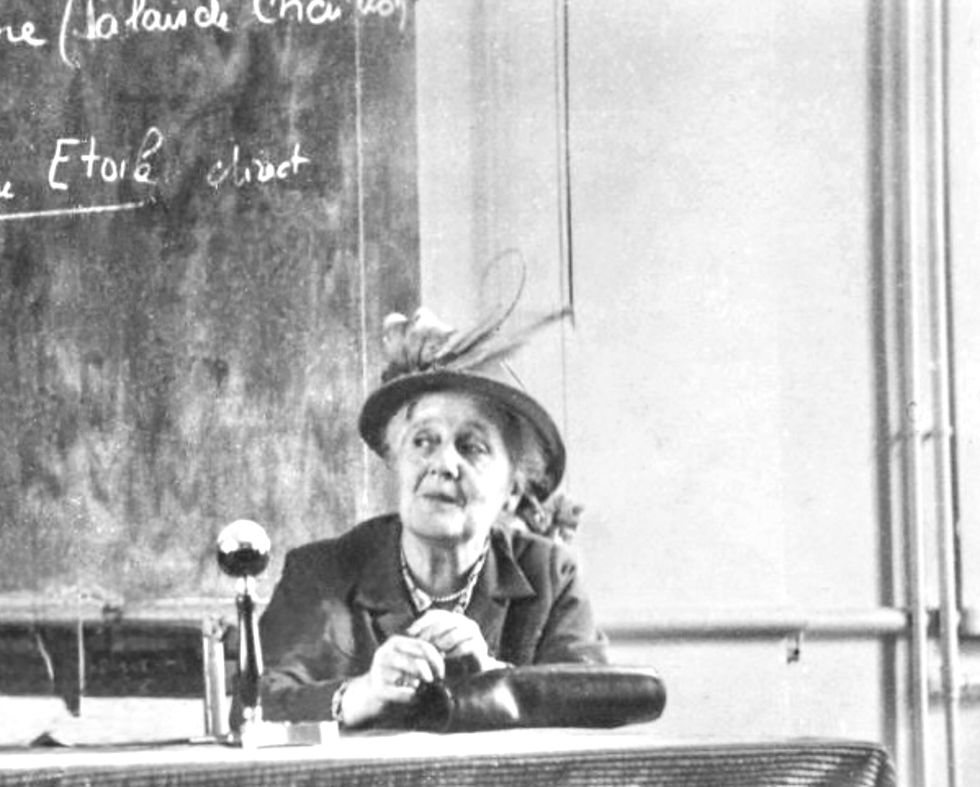
Melanie Klein was born into a Jewish family and spent most of her early life in Vienna. Earlier underestimated in America, she became a leading figure in psychoanalytic circles from the 1920s until her death in 1960. She was known for her work in child analysis and was the primary figure in the development of object relations theory.
Key theories
-
Object relations theory in psychoanalysis posits that early childhood relationships with primary caregivers, particularly the mother, profoundly shape an individual’s later interactions and emotional development. It emphasises internalised mental representations of self and others, which guide interpersonal relations and influence one’s sense of self-worth and attachment styles.
-
Object relations theory is a variation of psychoanalytic theory, which places less emphasis on biological-based drives and more importance on consistent patterns of interpersonal relationships.
Quotes
The infant’s anxieties are not mere disturbances; they are active forces shaping the mind.
We carry inside us the images of others — good and bad — which continually shape our perceptions and relationships.
The earliest experiences of love and hate are internalised and continue to influence adult relationships.
To understand the patient, one must understand the internal objects they have built from early experiences.

Rollo May
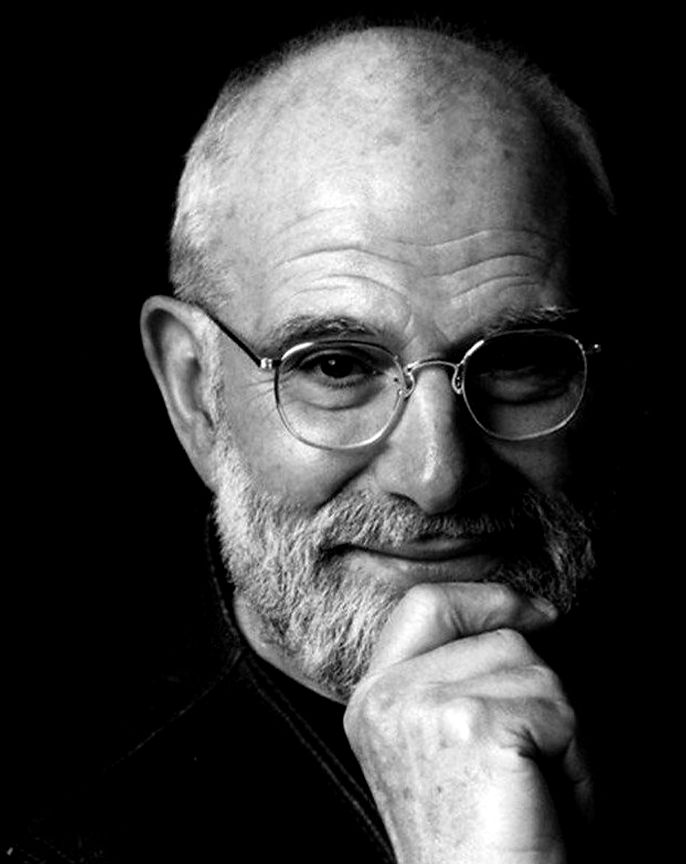
Rollo May (1909–1994) was an American existential psychologist and one of the most influential figures in humanistic and existential psychology. He’s often associated with Carl Rogers and Abraham Maslow, but he focused more on the human experience of anxiety, freedom, and meaning.
Key theories
-
Humans are free, responsible, and creative, but this freedom naturally brings anxiety. Facing it consciously is key to living authentically.
-
Existential Anxiety arises from facing life’s ultimate concerns—freedom, isolation, death, and meaninglessness; Constructive vs. Destructive Anxiety: Constructive anxiety motivates growth, creativity, and change. Neurotic anxiety occurs when we avoid or repress these realities. Therapeutic Implication: Clients are encouraged to confront anxiety rather than escape it.
-
Love and creativity are fundamental ways humans express their essence and connect with life
-
Focus on meaning-making, rather than symptom reduction alone
-
Explore personal values, purpose, and choice to allow clients to live a fuller life.
Quotes
The opposite of courage in our society is not cowardice, it is conformity.
Anxiety is the dizziness of freedom.
Man cannot live without meaning.
Freedom is the capacity to pause between stimulus and response and, in that pause, to choose the one response toward which we wish to throw our weight.
James Bugental
James Bugental (1915–2008) was an American existential-humanistic psychologist known for his work in existential psychotherapy. He taught that psychological growth comes from facing the realities of existence, embracing responsibility, and living authentically. His approach combines humanistic optimism with existential realism.
Key theories
-
Existential-Humanistic Approach: Focuses on the human experience as it is lived, rather than just symptoms or behaviour. Emphasises subjective experience, self-awareness, and the client’s responsibility for their life choices.
-
Therapy is a dialogue about existence, helping clients explore what it means to live fully.
-
Bugental’s key contribution is that psychological growth comes from confronting life’s realities, cultivating self-awareness, embracing freedom and responsibility, and living authentically.
Quotes
To be fully alive, fully human, and completely awake is to be continually thrown out of the nest.
Awareness is the key to the fullness of life.
We do not fear death, but the loss of meaningful life.
Growth occurs when we take responsibility for our own existence rather than blaming the world.

Murray Bowen
Murray Bowen (1913–1990) was an American psychiatrist and the founder of Bowen Family Systems Theory, one of the foundational models in family therapy. He taught that individual problems often reflect family patterns, and true change comes from awareness, differentiation, and healthier relational functioning across generations.
Key theories
-
Differentiation of Self: The ability to separate one’s thoughts and feelings from the emotional system of the family.
-
Family Projection Process: How parents transmit their anxieties and emotional patterns to children.
-
Multigenerational Transmission Process: How family patterns and behaviours pass down through generations.
-
Emotional Cutoff: How people manage anxiety in family relationships by emotionally or physically distancing themselves.
-
His model emphasises understanding patterns, not blaming individuals, and seeing symptoms in the context of the family system.
Quotes
The family is a system in which one person’s anxiety affects the whole unit.
Anxiety is transmitted from one generation to the next through patterns of relationship.
The more differentiated a person becomes, the less they are reactive to the emotional system around them.
True change occurs when a person becomes aware of the forces in the family system and acts thoughtfully rather than reactively.

Jessica Benjamin
Jessica Benjamin (born 1946) is an American psychoanalyst, clinical psychologist, and feminist theorist known for her influential work in relational psychoanalysis and gender, power, and intersubjectivity. She builds on the ideas of Melanie Klein, Donald Winnicott, and object relations theory, but adds a strong focus on mutual recognition and power dynamics in relationships.
Benjamin bridges psychoanalysis and feminism: she shows that patriarchal power structures are mirrored in unconscious relational patterns, and that therapy can help people break cycles of domination and submission in personal and societal relationships.
Key theories
-
Relational Psychoanalysis: Emphasises the mutual influence of self and others in shaping personality. Psychological development is seen as a two-way process: not just internalising others, but also negotiating recognition and influence.
-
Mutual Recognition: Healthy relationships require acknowledging the other as a separate, autonomous person while maintaining one’s own sense of self. Failure of mutual recognition can lead to domination, submission, or conflict in adult relationships.
-
Contributions to Gender and Power: Explores power, gender, and oppression in personal and societal relationships. Integrates psychoanalysis with feminist theory, highlighting how social structures influence personal dynamics.
-
Builds on Klein’s ideas about internalised “good” and “bad” objects. Focuses on how these internalised patterns play out in adult relationships, particularly in terms of control, dependence, and recognition.
Quotes
Mutual recognition is the basis for genuine intimacy.
The struggle for recognition underlies much of human conflict.
Gendered hierarchies are reproduced not only in society but within the psychic structures we internalize from early relationships.
True equality requires acknowledging the other as a full subject, not as an object of our projections or desires.

Virginia Satir
Virginia Satir (June 26, 1916 – September 10, 1988) was an American author, clinical social worker and psychotherapist, recognised for her approach to family therapy. Her pioneering work in the field of family reconstruction therapy honoured her with the title "Mother of Family Therapy".
Virginia Satir’s work teaches that healthy families require clear communication, strong self-esteem, and awareness of relational patterns. Therapy is about empowering individuals, improving family interactions, and fostering growth.
Key theories
-
Family Systems and Communication: she viewed the family as an emotional system where each member influences and is influenced by others. She emphasised clear, congruent communication as essential for healthy relationships and believed that poor communication leads to misunderstandings, conflict, and emotional distance.
-
Self-Esteem core belief: She believed and taught that self-esteem is the foundation of personal and family health and that low self-esteem in one family member affects the entire family system. She taught that therapy should focus on boosting self-worth to promote healthier interactions.
-
The Five Communication Styles:
Satir identified common patterns people use under stress:
-
Placating: Always appeasing others, neglecting own needs.
-
Blaming: Criticizing others to feel superior or in control.
-
Computing / Super-Reasonable: Overly rational, detached, avoids feelings.
-
Distracting / Irrelevant: Deflects or distracts to avoid emotional engagement.
-
Leveling / Congruent: Honest, direct, and respectful expression of feelings and needs.
Goal: Move toward congruent communication, which is honest and balanced.
-
The Satir Change Model: Current state → Survival coping → New possibilities → Integration → Transformation
-
Therapy encourages openness to change, self-awareness, and experimentation with new behaviours.
-
Growth-Oriented Approach: she emphasised personal growth over symptom reduction. Encourages clients to discover inner resources, express feelings, and strengthen relationships.
Quotes
We must not allow other people’s limited perceptions to define us.
The most important thing in communication is hearing what isn’t said.
People react not to reality, but to their perceptions of reality.
In communication, it is not what you say but how you say it that matters.
You can’t teach people directly; you can only model what you want them to learn.
Life is not made up of what you have, but of who you are.

Salvador Minuchin
Salvador Minuchin (October 13, 1921 – October 30, 2017) was a family therapist born and raised in San Salvador, Entre Ríos, Argentina. He was a pioneering family therapist known for developing structural family therapy.
Salvador Minuchin’s work shows that family problems are relational and structural, not just individual. Therapy works by mapping, joining, and actively restructuring family interactions to improve overall functioning.
Key theories
-
Family Structure: Minuchin views families as systems with interconnected parts, including subsystems;
- Parental subsystem
- Sibling subsystem
- Extended family subsystem
Dysfunction occurs when boundaries between subsystems are inappropriate (e.g., parents ally with one child against another).
-
Boundaries: He believed that these define how members interact and relate to each other, ranging from too rigid (disengaged) to too diffuse (enmeshed), impacting the family's functioning.
-
Hierarchies: He focussed on the fact that healthy families have clear hierarchies, with parents holding authority and distinct roles within their subsystem.
-
Triangles: He emphasised that these are alliances or coalitions within the family that can either support or disrupt family functioning.
Quotes
Change one person and you change the system.
Family therapy is about changing the rules of the system, not blaming individuals.
Enmeshment and disengagement are two extremes that prevent families from functioning effectively.
Restructuring occurs when families are helped to experience new ways of interacting.

Stephen Mitchell
Stephen Mitchell (1946–2000) was an American psychoanalyst and relational theorist. He was trained in classical psychoanalysis but became a major figure in relational psychoanalysis, bridging psychoanalytic theory with contemporary relational and interpersonal perspectives.
He emphasised that human psychology is fundamentally relational, and therapy is most effective when it addresses interactive patterns, mutual influence, and the co-construction of meaning between people.
Key theories
-
Relational Psychoanalysis: moves beyond classical psychoanalysis, which emphasised intrapsychic drives. Emphasises that human relationships as central to psychological development and psychological symptoms arise from repeated relational patterns, not only internal conflicts.
-
Two-Person Psychology: Human experience is co-created in relationships. The therapist and client influence each other; therapy is a mutual, interactive process. This theory contrasts with classical “one-person psychology” where the therapist interprets the client from a neutral stance.
-
Integration of Object Relations: Builds on Melanie Klein and other object relations theorists. It focuses on internalised relational patterns and how they shape adult interactions and explores the tension between autonomy and relatedness in human development.
-
Self and Intersubjectivity: The self is relationally constructed — it emerges through interactions with significant others. Emphasises the importance of mutual recognition (similar to Jessica Benjamin). Developmental and therapeutic change occurs when new relational experiences correct or expand past patterns.
Quotes
We are shaped by our relationships, and our relationships are shaped by us.
Therapy is not something done to a person; it is something done with a person.
The basic truth of the human condition is that we are simultaneously autonomous and connected.

Sigmund Freud
Sigmund Freud (1856–1939) was an Austrian neurologist and the founder of psychoanalysis. Freud may justly be called the most influential intellectual legislator of his age.
Freud revolutionised psychology by exploring the unconscious mind, childhood development, and the role of sexuality in human behaviour. His theories laid the foundation for psychodynamic therapy, though many of his ideas have been revised or challenged over time.
Key theories
-
The Unconscious Mind: He believed that the mind has three levels:
- Conscious: Thoughts and feelings we are aware of.
- Preconscious: Thoughts just below awareness, retrievable.
- Unconscious: Reservoir of repressed memories, desires, and drives that influence behaviour.
-
Much of human behaviour is driven by unconscious processes.
-
Structure of Personality: Freud divided personality into three interacting parts:
- Id: Instinctual drives, operates on pleasure principle.
- Ego: Rational self, mediates between id and reality.
- Superego: Internalised moral standards; conscience.
-
Defence Mechanisms: Unconscious strategies to reduce anxiety from conflicts between id, ego, and superego. Common mechanisms: Repression, denial, projection, displacement, rationalisation, sublimation.
-
Dream Analysis: He believed that dreams are the “royal road to the unconscious.” Manifest content (what we remember) vs. latent content (hidden meaning). Dreams reveal unconscious desires and conflicts.
-
Transference and Countertransference: Central in psychoanalytic therapy for understanding relational patterns.
- Transference: Client projects feelings about significant others onto therapist.
- Countertransference: Therapist’s emotional response to the client.
-
Psychic Determinism: All behaviours, thoughts, and feelings have meaning and are influenced by unconscious processes. Nothing is purely accidental.
-
Psychosexual Stages of Development: Freud proposed that personality develops through stages of childhood, each centred on erogenous zones. In relation to these fixations or unresolved conflicts in each of the stages can influence adult behaviour.
Quotes
The mind is like an iceberg, it floats with one-seventh of its bulk above water.
One day, in retrospect, the years of struggle will strike you as the most beautiful.
Unexpressed emotions will never die. They are buried alive and will come forth later in uglier ways.
Out of your vulnerabilities will come your strength.
No mortal can keep a secret. If his lips are silent, he chatters with his fingertips; betrayal oozes out of him at every pore.